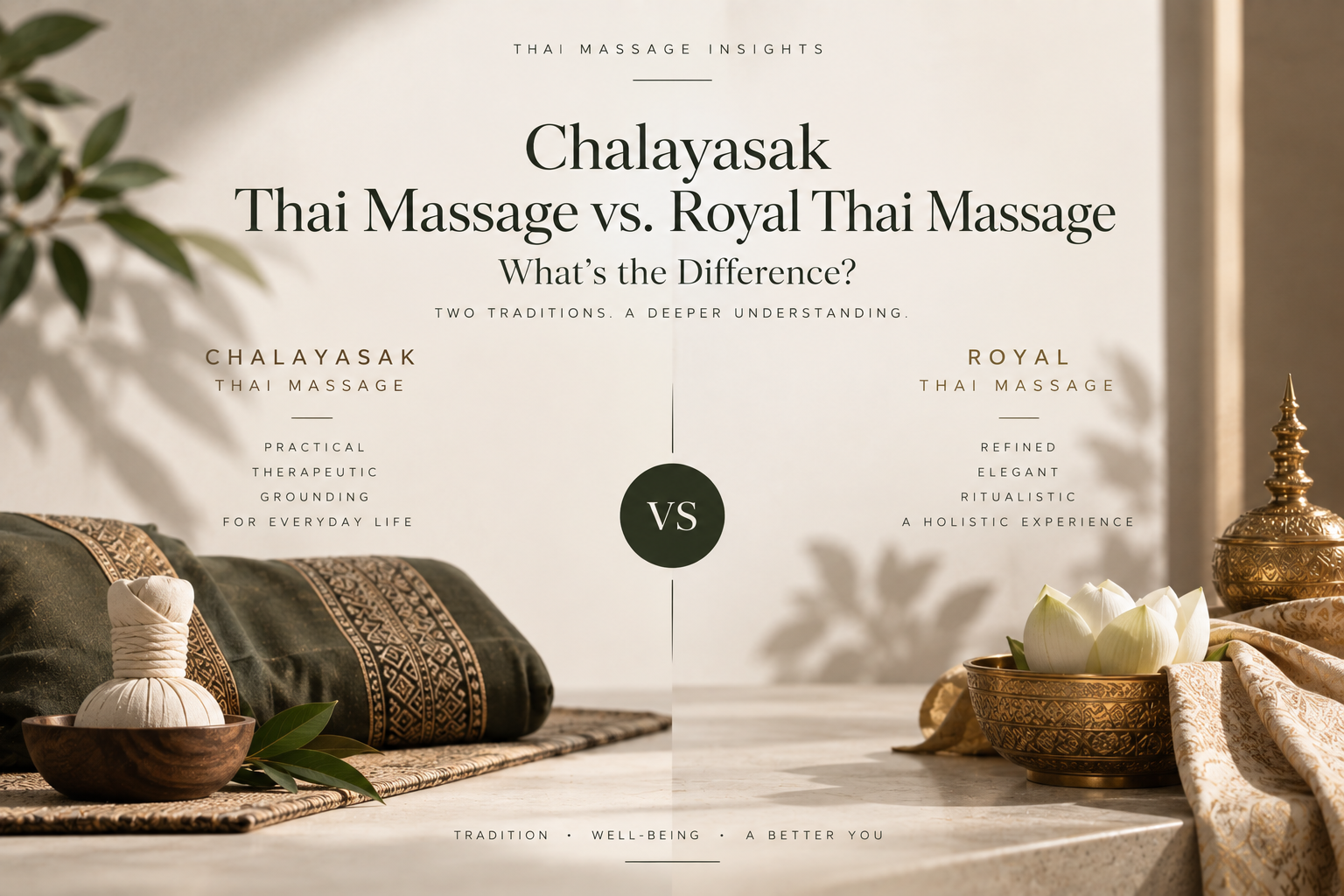
Traditional Thai Massage: Chaloey Sak vs. Royal Court Massage — What’s the Difference?
When people think of Thai Massage, they often picture its distinctive combination of pressure, assisted stretching, and body movements. However, Thai massage is not limited to just one approach. Traditional Thai massage encompasses different styles and techniques, each with its own characteristics and methods.
Two important styles commonly discussed in the study of traditional Thai massage are Chaloey Sak Massage and Royal Court Massage.
Although both are rooted in traditional Thai massage wisdom, they differ in terms of techniques, methods of applying pressure, the parts of the therapist’s body used during treatment, and the overall structure of the massage.
In this article, Kham Massage and Spa introduces the key differences between these two styles to help you gain a deeper understanding of the art and heritage of Thai massage.
What Is Chaloey Sak Massage?
Chaloey Sak Massage is a traditional Thai massage style that has been widely practiced and passed down among the general population. Many of its characteristics are similar to what people today commonly recognize as Traditional Thai Massage.
One of the key features of Chaloey Sak Massage is its wide variety of techniques, including pressing, kneading, squeezing, assisted movements, and stretching.
Depending on their training and the technique being performed, therapists may use different parts of the body to apply pressure, including the fingers, palms, elbows, knees, or feet.
The massage may also incorporate assisted stretching, such as gently stretching the arms and legs or guiding the body into appropriate positions.
As a result, Chaloey Sak Massage generally involves more movement and stretching than massage styles that focus primarily on pressure.
What Is Royal Court Massage?
Royal Court Massage (Nuad Ratchasamnak) is a traditional Thai massage approach associated with the customs, etiquette, and practices of the Thai royal court.
Its distinctive characteristics go beyond the amount of pressure applied. The practice also emphasizes the therapist’s position, the manner of approaching the recipient, hand placement, pressure control, and the sequence of techniques.
Royal Court Massage primarily uses the hands and fingers to apply controlled pressure to specific areas in a systematic manner. Traditionally, it places greater restrictions on the use of other parts of the therapist’s body than Chaloey Sak Massage.
Therefore, the use of elbows, knees, or feet is generally not emphasized, and broad assisted stretching or extensive body manipulation is also less prominent.
The key principles of this style are precision, controlled pressure, and a structured approach to massage.
What Is the Difference Between Chaloey Sak and Royal Court Massage?
In simple terms, the main differences lie in their techniques, methods of applying pressure, and the structure of the massage.
Chaloey Sak Massage incorporates a wider variety of techniques. Depending on the method being used, therapists may apply pressure with the hands, fingers, elbows, knees, or feet, while assisted stretching and body movements may also be included.
In contrast, Royal Court Massage primarily emphasizes the hands and fingers, with particular attention given to precise positioning, controlled pressure, and a systematic sequence of techniques.
Both styles have their own distinctive characteristics. One should not simply be considered “better” than the other, as they represent different approaches and traditions within the broader practice of Thai massage.
What Type of Thai Massage Is Commonly Offered at Massage Shops?
The Thai Massage or Traditional Thai Massage services commonly offered at massage and spa establishments today may incorporate techniques similar to those found in Chaloey Sak Massage. Traditional techniques may also be adapted to suit the service style and standards of each establishment.
During a typical session, clients may experience pressure applied with the fingers or palms, muscle stretching, and changes in body position throughout the massage.
However, the actual techniques used may vary depending on the therapist’s training, experience, selected massage program, and the standards of each establishment.
Therefore, seeing “Thai Massage” listed on a service menu does not necessarily mean that every step will strictly follow the traditional Chaloey Sak method.
How Should You Choose the Right Thai Massage for You?
Rather than choosing a massage based solely on the name of a particular tradition, it is important to consider your reason for receiving the massage, your personal preferences, and your physical condition.
Before your session begins, let your therapist know if there are specific areas you would like them to focus on, areas you would prefer them to avoid, or if you would like the pressure adjusted.
If the pressure feels too strong or you experience unusual pain or discomfort during the massage, you should inform your therapist immediately rather than continuing through the discomfort.
Who Should Take Extra Care Before Receiving a Massage?
Massage should not be used as a substitute for medical diagnosis or treatment.
People with acute injuries, underlying medical conditions, those currently undergoing medical treatment, pregnant individuals, or anyone with a health condition that could be affected by pressure, assisted movement, or stretching should inform the establishment and consult an appropriate healthcare professional before receiving massage services.
If you are experiencing unexplained pain or other unusual symptoms, you should seek an appropriate medical assessment rather than using massage to diagnose or treat the condition yourself.
Why Is the Art of Thai Massage So Fascinating?
The significance of Thai massage extends beyond the experience of relaxation. Behind the practice lies a rich body of knowledge, techniques, traditions, and cultural heritage.
Chaloey Sak Massage is distinguished by its variety of techniques and assisted stretching, while Royal Court Massage emphasizes structured practice, respectful etiquette, and precision in the use of the hands and fingers.
Understanding these differences allows us to appreciate that Thai Massage is much more than a relaxation experience. It is part of Thailand’s traditional health wisdom that has been passed down, practiced, and developed through generations.
Prepared by Kham Massage and Spa
Category: Thai Massage Knowledge & Wellness
Last Updated: September 17, 2026
Disclaimer: This article is intended for general educational purposes regarding traditional Thai massage. It is not a substitute for medical diagnosis, treatment, or advice from a qualified healthcare professional.